Do you need flood insurance? Here’s what the experts say
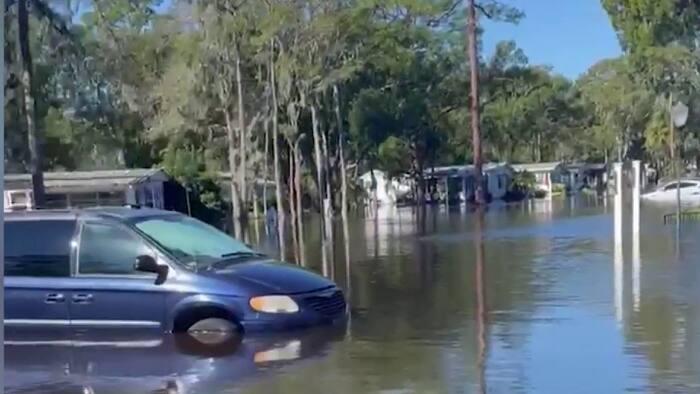
Marty DeBlois didn’t think he needed flood insurance when he moved into his Colony In The Woods neighborhood, but then Hurricane Ian turned his street into a river.
“My wife’s car right there was over across the street, got destroyed, my Lexus got destroyed,” DeBlois said. “It was brutal. It was a tough thing to take. And then two years later, Milton came.”
DeBlois is not alone in his vulnerability or his surprise.
Do you need flood insurance?
“If it rains at your house, you need flood insurance,” said Kevin Guthrie, executive director of the Florida Division of Emergency Management, challenging the common misconception that only homes in designated flood zones need coverage.
“There is no system infrastructure in the world that’s designed to take 4 inches, 6 inches, 8 inches of rainfall an hour,” Guthrie explained. “Those things are going to fail. They’re designed to move 2, 3 inches at a time.”
The hidden gap in homeowner protection
Many homebuyers mistakenly believe they’re safe from flood damage if their property isn’t in a designated flood zone. According to the Insurance Information Institute, standard homeowners and renters insurance policies typically exclude flood damage, leaving many properties vulnerable to this type of loss.
Recent data from the Federal Emergency Management Agency shows this coverage gap has costly consequences. In 2024, the National Flood Insurance Program (NFIP) processed nearly 99,000 claims, with an average payout of $33,905 per claim.
Making flood insurance accessible
The NFIP, managed by the FEMA, offers flood insurance through a network of more than 50 insurance companies. Coverage costs vary based on:
- Property location
- Building construction
- Replacement cost value
- Elevation and distance from flooding sources
- Flood mitigation features
According to NFIP, most homeowners can secure coverage for roughly $400-$500 annually. But keep in mind, policies include a 30-day waiting period before coverage begins.
Hundreds of thousands of properties left off high-risk maps
A News 6 investigation found nearly 350,000 properties statewide face flood hazards but are not recognized as high risk in FEMA flood maps. The list includes Pine Hills, Poinciana, and Union Park — all areas FEMA does not currently classify as high risk.
“A lot of Central Floridians don’t realize they’re at risk of flooding because they don’t live along the coast,” said Mark Friedlander, Florida spokesman for the Insurance Information Institute.
Most Central Florida homeowners have no flood coverage
Despite the widespread risk, only 20% of Floridians carry flood insurance. In Orange, Osceola, Seminole, and Lake counties, just 6% of homes have a policy, leaving the vast majority of homeowners financially exposed.
The financial stakes are significant. According to Friedlander, just one inch of floodwater causes $25,000 in damage.
The growth factor
The pace of development across central Florida may be compounding the problem, potentially leaving more homeowners vulnerable as hurricane season ramps up. DeBlois’s community has since required all new homes to be built six feet off the ground.
But DeBlois himself chose to stay in the 80% without a policy.
“I’m pretty confident,” he said. “I mean, I know one thing — we won’t need flood insurance.”
Flood insurance isn’t cheap. If you’re concerned about the price, there are a couple of ways to not break the bank.
- The National Flood Insurance Program offers plans where you can break up the cost.
- FEMA offers discounts on your premium if you protect your home. This can include elevating your utilities or installing proper flood vents in crawlspaces.
- Shop around the private market for the best price.