
‘The cost is just astronomical:’ Orange County teachers face soaring health insurance costs
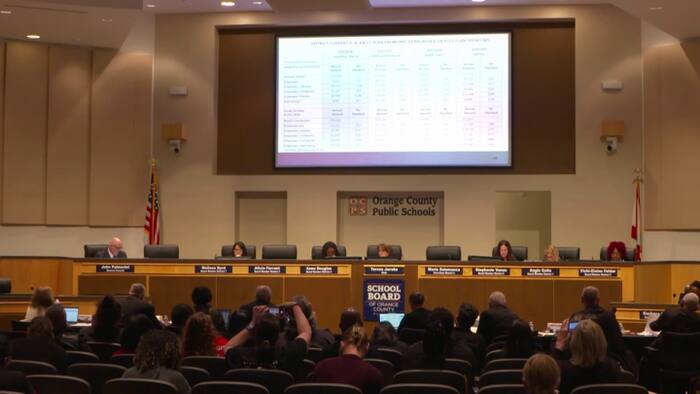
Some Orange County teachers are questioning whether they can afford the health care they depend on after the Orange County School Board approved significant changes to the district’s employee health insurance plans.
For Orange County Public Schools teacher Sandra Thuringer, health insurance is a necessity. She has diabetes, sleep apnea and thyroid cancer.
Now, keeping the doctors she relies on could cost her thousands of dollars more each year.
“I feel absolutely horrible,” Thuringer said. “I have to be able to come up with $3,000 every single year that wasn’t in my budget.”
On Nov. 13, the Orange County School Board voted 5-3 to approve the district’s proposal following an eight-hour impasse hearing, rejecting a compromise backed by the teachers union.
The decision followed months of contract negotiations between the district and its employee unions over salaries and health insurance costs.
What the insurance changes mean for teachers
Under the approved proposal, the district will consolidate its health insurance to these two: SureFit and OA Plus.
Premiums and deductibles will more than double under several coverage options. One option carries a $2,000 dollar deductible which is a jump from $300.
For educators with existing medical conditions, switching physicians isn’t always a simple option.
“For me, I have thyroid cancer, so I can’t just go to any endocrinologist,” Thuringer said.
David Grimm, who has worked for the district since 1998, faces a similar dilemma.
Grimm broke his neck in high school and continues to rely on specialists for medical treatment.
“I actually had to go to the emergency room this past summer, right before school started, because I was in such severe pain, a debilitating pain,” Grimm said.
He worries the rising insurance costs will place a significant financial burden on educators and their families.
“The cost is just astronomical,” Grimm said.
Teachers say raises won’t cover rising costs
Under the approved proposal, employees will receive salary increases that include:
- A 2.65% raise for teachers rated highly effective.
- A 1.98% raise for teachers rated effective.
- A 2.5% base salary increase for education support professionals.
- A $4,000 base salary increase and a $4,000 one-time supplement for eligible exceptional student education speech-language pathologists.
The district values the compensation package at approximately $56.6 million, including benefits.
However, Thuringer said her raise won’t be enough to offset her additional medical expenses.
“The amount of money that they’re giving me for my raise, it’s not even going to put a teeny tiny dent into it,” Thuringer said.
Why the district says changes are necessary
The district said the insurance changes are necessary to address a projected $145 million insurance fund shortfall.
District officials cited rising health care costs, declining student enrollment and limited state funding as contributing factors to its financial challenges.
Officials also estimated that implementing the special magistrate’s recommendations would cost the district approximately $105 million, an expense they said the district could not afford.
Separately, the school board agreed to use funds associated with property tax litigation settlements to provide one-time salary supplements to employees. Individual payment amounts have not been finalized.
Despite the district’s financial concerns, Grimm fears some educators will be forced to put their health on hold.
“They’re going to have to make a decision,” Grimm said. “Do they change physicians or do they they pay the higher costs.”
What’s next for teachers?
The Orange County Classroom Teachers Association is urging teachers to vote against ratifying the agreement.
A rejection would not prevent the school board’s insurance changes from taking effect for the fiscal year covered by the negotiations, but it would signal educators’ opposition to the district’s decision.
For teachers like Thuringer and Grimm, the changes mean reevaluating their household budgets while navigating ongoing medical needs.