
Dollars & Sense: October jobs report beats expectations
What to Know:
- Hiring exceeded expectations: U.S. employers added 165,000 jobs in October, and unemployment edged down to 4.1%.
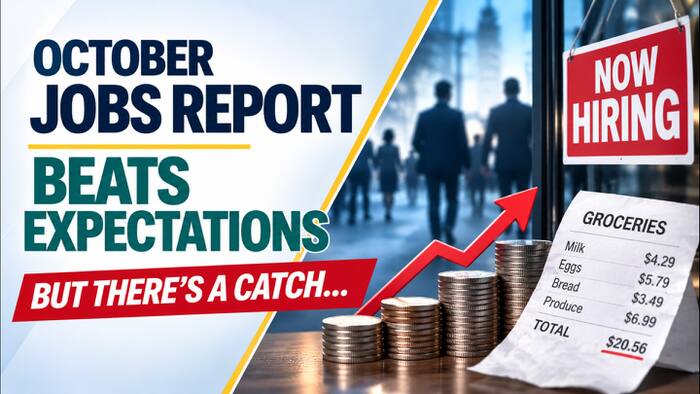
- Paychecks are losing ground: average hourly earnings increased 3.1% over the past year, compared with a 3.7% annual inflation rate.
- Schlesinger recommends building an emergency fund capable of covering six months of expenses in case of a job loss.
ORLANDO, Fla. – The U.S. economy added more jobs than expected in October, offering encouraging news about the strength of the labor market. But for millions of Americans struggling with higher prices, the latest employment report also highlights a troubling reality: wages simply aren’t keeping up with inflation.
According to the U.S. Bureau of Labor Statistics, employers added 165,000 jobs in October, far exceeding economists’ expectations of roughly 60,000. The unemployment rate edged down to 4.1%, from 4.2% in September and the government also revised employment figures for August and September upward, adding a combined 84,000 jobs to previous estimates.
But while the job market appears to be holding steady, workers are facing another challenge. Average hourly earnings only increased 3.1% over the past year, while the latest annual inflation rate stands at 3.7%. In the simplest of terms, wages are not keeping up with rising costs, and that puts additional pressure on household budgets.
CBS News Business Analyst Jill Schlesinger says today’s report was a mixed bag of good news and bad news. Here’s our full transcript of an interview we did with her this morning.
WKMG-TV: One of the most closely watched indicators of the economy is the employment or jobs report. And earlier today the government released results from October. CBS News Business Analyst Jill Schlesinger is here to break it down.
Jill, what were the results?
Jill Schlesinger: Well, the results were better than expected. The economy produced 165,000 jobs. We were expecting about 60,000. We got revisions higher to the previous two months, and we’ve got monthly average job creation running at about 86,000 this year.
We also saw the unemployment rate tick down to 4.1%. And you know, that rate, it’s been below 4.5% for just about five years. That is the longest stretch of unemployment below four and a half percent that we’ve seen over the past eight decades.
WKMG-TV: Wow. Affordability was the big issue in the midterms with prices rising, have wages kept up?
Jill Schlesinger: Here comes your bad news part of the segment, because average annual earnings in this report showed that we were seeing an increase of 3.1% from a year ago when it comes to our earnings. Sounds good, except that’s below the current inflation rate of 3,7%. That means that wages have come in below the pace of inflation for just a little more than a year.
And I think that was the frustration you have heard among a lot of American households. They say, hey, I have a job, it’s okay, but my pay is not keeping up with the rate of increase to prices.
WKMG-TV: And Jill, good news for the jobs report, but if you’re worried about losing your job, what can you do to prepare?
Jill Schlesinger: I think if you haven’t done this in a while, it’s a good time to say, how much are we spending on a monthly basis, right?
Now the thing is that although the data show a pretty good job market, it also shows that it’s taking people a long time to land a new job, about six months. So that means that your emergency reserve fund has to be able to cover your expenses for six months, if it can’t, try to beef that up.
And I would even say that… you should probably favor putting more money into that emergency reserve fund and take it away from your retirement contribution, at least temporarily, so you can get that six months all set. If you are carrying high interest debt, you may want to try to pay it down right now while you still have income.
Don’t forget to update the resume, the LinkedIn. All these things are so much easier to do while your paycheck is still coming in.
WKMG-TV: As usual, great advice, thank you, Jill. You can see Jill regularly on CBS Mornings and the CBS Evening News. For more analysis, go to JillOnMoney.com.