
Hegseth is in Venezuela to meet interim authorities, latest Trump Cabinet member since Maduro ouster
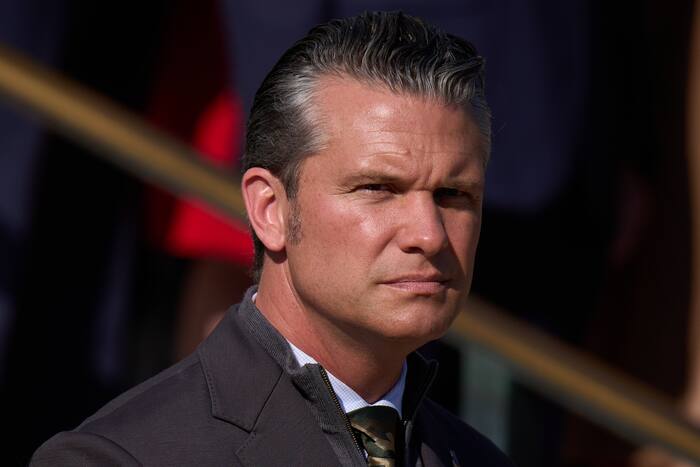
Defense Secretary Pete Hegseth is visiting Venezuela to meet with interim authorities Wednesday, underscoring efforts by the Trump administration to deepen its influence in the Latin American country since U.S. forces ousted then-President Nicolás Maduro in January.
Hegseth is the latest member of President Donald Trump’s Cabinet to travel to Venezuela following visits this year by the Interior and Energy secretaries, who have focused on efforts to tap the South American nation’s oil reserves and critical minerals. It comes after Trump said in August that Hegseth helped broker a sweeping deal for the U.S. to take control of some Venezuelan oil reserves.
Venezuelan state television broadcast footage of Hegseth at the presidential palace in Caracas, alongside acting President Delcy Rodríguez. The Pentagon chief is there months after U.S. forces carried out a surprise nighttime raid in the Venezuelan capital to capture Maduro and whisk him to New York to face drug trafficking charges.
The U.S. military has been expanding its attention on the region since Trump returned to the White House last year, with the Republican president promising to focus more on the Western Hemisphere and battle Latin American drug cartels.
To try to stem the flow of narcotics into the U.S. and the scourge of fatal overdoses, American forces have been attacking what the Trump administration says are boats smuggling drugs in the Caribbean Sea and the eastern Pacific Ocean. At least 240 people have been killed since the administration began targeting those it calls “narcoterrorists” in September 2025, although U.S. officials have released little evidence publicly to support claims the vessels were carrying drugs.
Hegseth’s visit comes at a time of uncertainty for Venezuelans regarding who will lead the nation in the coming months and years. Rodríguez, a Maduro ally, took over in Venezuela after Maduro’s capture. Rodríguez’s court-allowed term expired in July, but she continues to function as Venezuela’s head of state.
Opposition leader María Corina Machado’s recently returned to Venezuela from exile following seven failed attempts that opposition activists claimed were thwarted by the government.
U.S. Secretary of State Marco Rubio has said that the “safe” return of the politician was the result of “reconciliation talks” supported by his country, which he considered “the best opportunity” Venezuela has had in three decades to achieve free and fair elections and a lasting democracy.
The lack of a date for the next presidential election has left many Venezuelans conflicted on their sentiment toward Trump. While relieved that Maduro is no longer president thanks to the surprise U.S. military raid that captured him, many believe that the White House’s decision to prioritize reviving Venezuela’s oil industry over pro-democracy steps was the wrong approach for meaningful changes in the South American country.
A defiant Maduro appeared in court in New York in January and declared himself “the president of my country” as he protested his capture and pleaded not guilty to federal drug trafficking charges that the Trump administration used to justify removing him from power.
“I was captured,” Maduro said in Spanish as translated by a courtroom interpreter before being cut off by the judge. Asked later for his plea to the charges, he stated: “I am innocent. I am not guilty. I am a decent man, the constitutional president of my country.”
Maduro and his wife have insisted that U.S. accusations against them are false.