
NASA chief tells UCF students they could help build a moon base
NASA Administrator Jared Isaacman told UCF students Friday that the agency’s next big goal is not simply returning astronauts to the moon. It is building the workforce and technology for a lasting presence there.
“We are going back to the moon,” Isaacman said, drawing applause at the FAIRWINDS Alumni Center. “We aren’t just going for the flags and footprints.”
Isaacman said NASA plans to build toward a moon base through repeated robotic missions, testing landers, rovers and other equipment before astronauts begin staying on the lunar surface for longer periods. He said the first mission in that effort, carrying an uncrewed lander and the FLIP rover, is expected in January, with missions eventually reaching a near-monthly pace.
“We didn’t just jump to Apollo 11,” he said. “We had the Mercury program, Gemini program and a lot of Apollo missions before the Eagle ultimately landed. We need to do the same thing.”
The approach, Isaacman said, would draw on 26 years of experience operating the International Space Station. He described a gradual progression from short stays on the moon to weeks-long visits and, eventually, crew rotations supported by a lunar base.
NASA’s current public schedule lists Artemis III as a 2027 test flight in low Earth orbit, where astronauts are expected to practice docking with commercial lunar landers. Artemis IV, planned for 2028, is the agency’s first planned crewed lunar landing under the current schedule. www.nasa.gov
Isaacman said the effort will involve contractors and workers across many fields. “We need the engineers. We need the scientists. We need the technicians. We need the operators, and we need the astronauts,” he said.
UCF says its graduates make up 29% of Kennedy Space Center’s workforce. Isaacman pointed to the university’s connection to the space industry and urged students to pursue NASA internships and opportunities with commercial space companies building lunar hardware. www.ucf.edu
“There is so much opportunity right now for students interested in this field to work on hardware that will go to the moon in the next couple of years,” he said.
Isaacman also outlined NASA projects beyond the moon, including the Roman Space Telescope’s search for exoplanets, NEO Surveyor’s hunt for potentially hazardous asteroids, Dragonfly’s planned rotorcraft mission to Saturn’s moon Titan, and a nuclear-powered spacecraft intended to deliver three helicopters to Mars.
He connected those missions to a broader question about life beyond Earth. “Surely life has to be out there somewhere,” he said. “Maybe—what if it’s everywhere?”
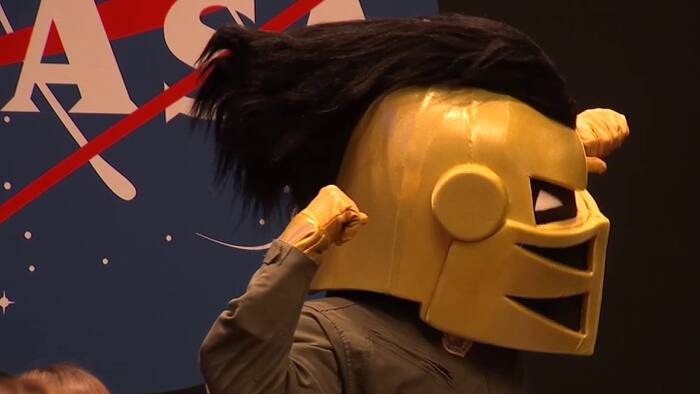
The UCF event included students, Space Force cadets and Knightro, the university’s mascot.