New Disney Patent Offers More Insight Into Cars Ridge Run Rally Ride System
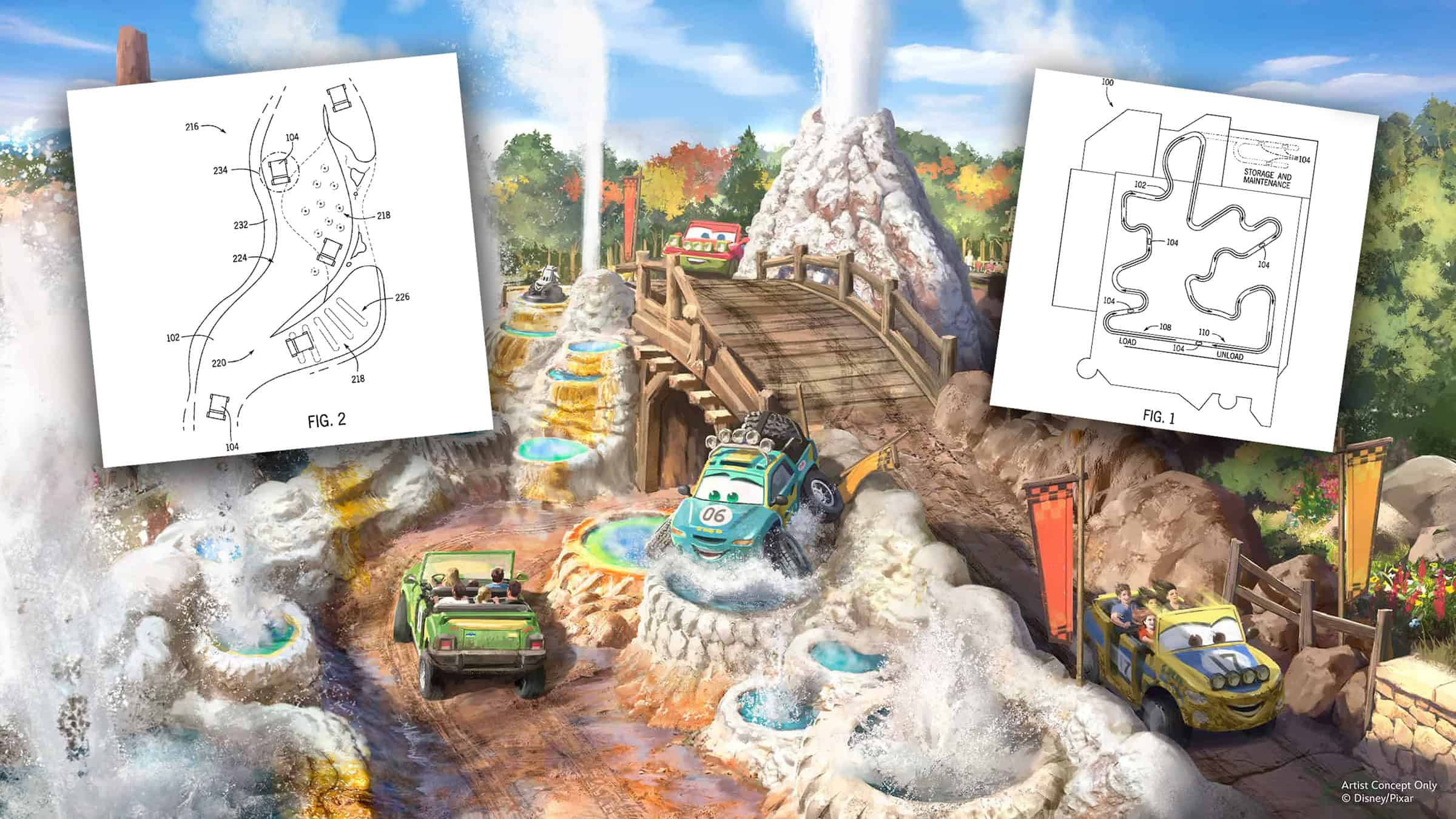
Disney’s patent for a free-range ride vehicle that guests can steer over uneven, off-road terrain is back for a third filing. A continuation application published today keeps the same ride concept and drawings as the original patent we covered in March, but it seeks new claims on how guest-driven vehicles know where they are, using a guide wire along the track and sensors at both ends of each vehicle. We’ve tied this patent to the Cars Ridge Run Rally ride in earlier coverage, so here’s a closer look at what changed.
Disney Adds Guide Wire Claims to Free-Range Ride Vehicle Patent
IN THIS ARTICLE:
- The new filing claims a guide wire and front and rear sensors that keep guest-steered vehicles inside a track boundary.
- It continues the free-range ride patent Disney was granted in August, with the same description and drawings.
- Disney filed the follow-up in July, about four weeks before the original patent was granted.
The new publication, US 2026/0376916 A1, lists Disney as the applicant and the same two inventors as the original filing, Derek Lee Howard and Edward Allen Nemeth. Its title, “Ride System Featuring a Free-Range Vehicle Platform,” and its abstract match the earlier filing. The claims, the part of a patent that defines what Disney wants to protect, are where the changes are.
How the Guide Wire System Works
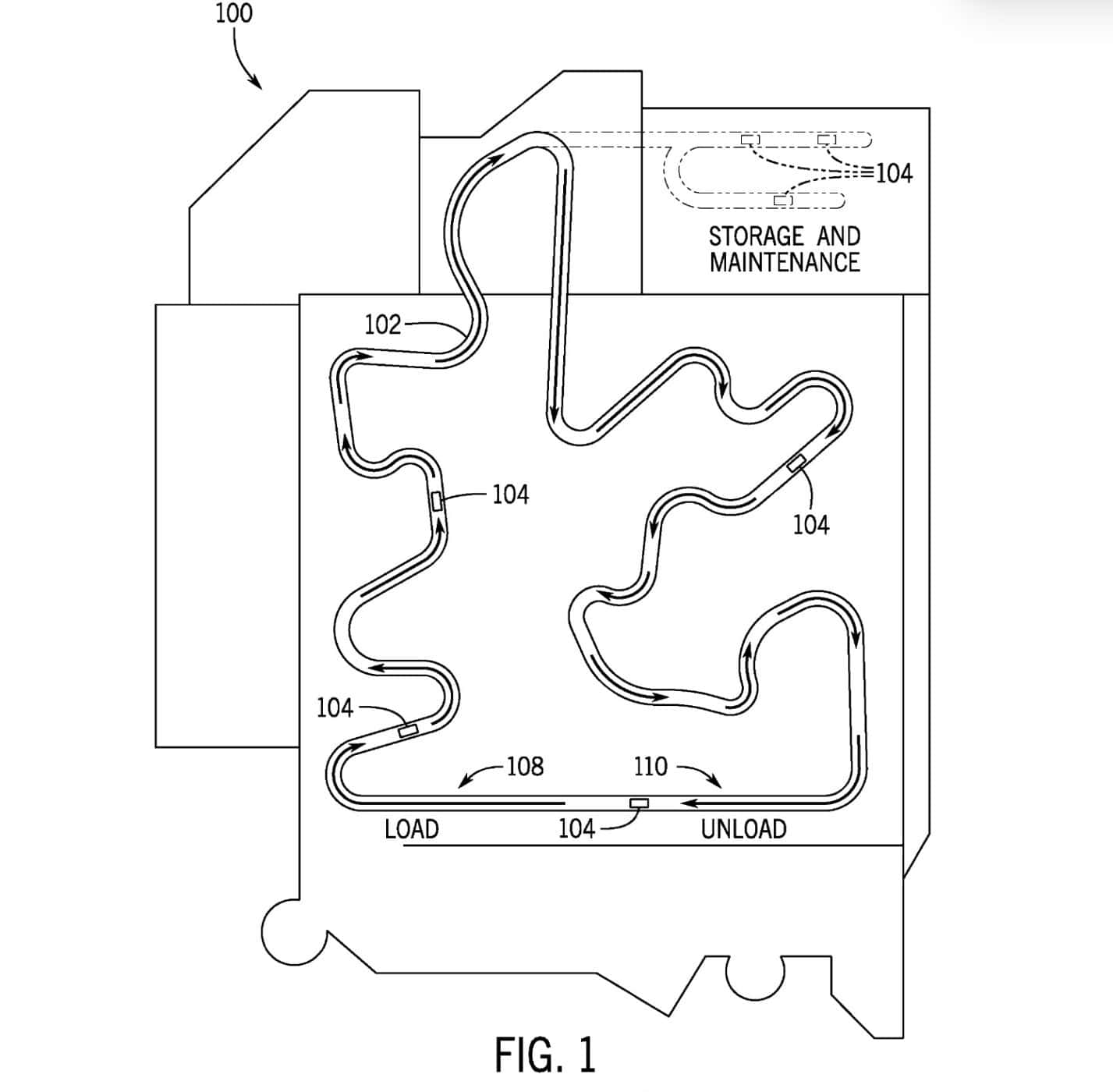
In simple terms, the new claims describe a wire that runs along the track. Each ride vehicle has a sensor near its front and another near its back, and both measure how far they are from that wire. A controller uses those two readings to work out where the vehicle sits from side to side.
From there, the controller sets a boundary a certain distance from the wire, and the filing says that distance can change with conditions on the track. If a guest steers toward the edge, the controller checks the vehicle’s position against that boundary and can adjust its position, speed, or steering.
Smaller claims fill in the details. Comparing the front and rear readings tells the controller which way the vehicle is heading, and it can slow the vehicle based on that heading. When no one is steering, the vehicle follows the guide wire by default. Markers along the track, such as a beacon, signal, or visual marker, let an onboard reader count its way along the route and work out the vehicle’s speed. Other claims cover a battery-powered motor, a lower top speed depending on where the vehicle sits relative to the wire, and slowing down on grades.
A Fleet Controller Sets the Pace
A second group of claims covers the whole fleet. A fleet controller sets a default position and pace for every vehicle and moves them along that path when guests aren’t steering. Riders can steer away from that default, but the controller checks how far they have gone against a track limit and can override them.
Those claims add overrides for when a vehicle gets close to a track boundary or another vehicle, with the buffer around each vehicle growing or shrinking with its speed. The controller can also update the default path when it detects a change in the track or a vehicle, keep space between vehicles, slow one down for the vehicle ahead of it, and steer a vehicle toward an attraction element. A final claim covers multiple paths through the ride, each with different attraction elements, for guests to choose between.
How It Compares With the Granted Patent
Disney first filed the original application in September 2024, and the patent office published it in March. The U.S. Patent and Trademark Office granted it as Patent No. 12,717,355 on August 25th. Disney had already filed this continuation on July 28th. The granted patent’s 20 claims center on guests picking their own path and controlling speed and direction, with a fleet controller that keeps vehicles a set distance apart. Its other claims cover alternate paths on different levels, rerouting around a problem on one path, and effects that nudge vehicles back toward their default path.
The guide wire, the front and rear sensors, and the track markers all appear in the original description and drawings, but none were claimed until now. A version of the fleet pacing claim appeared in the original application as published. Disney rewrote it before the grant, and it returns here as a method. As a published application, the new filing could still change or face rejection before any grant.
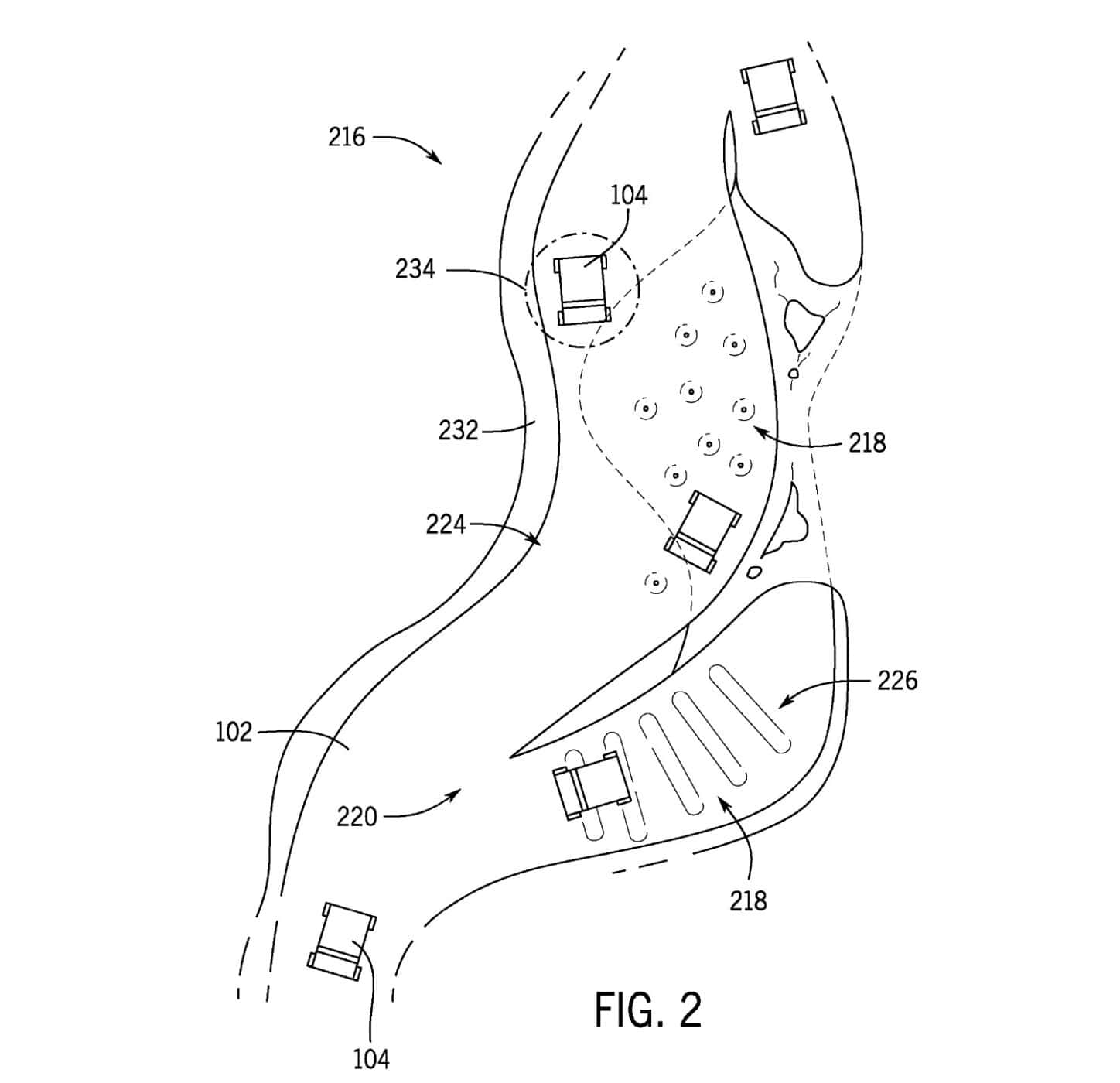
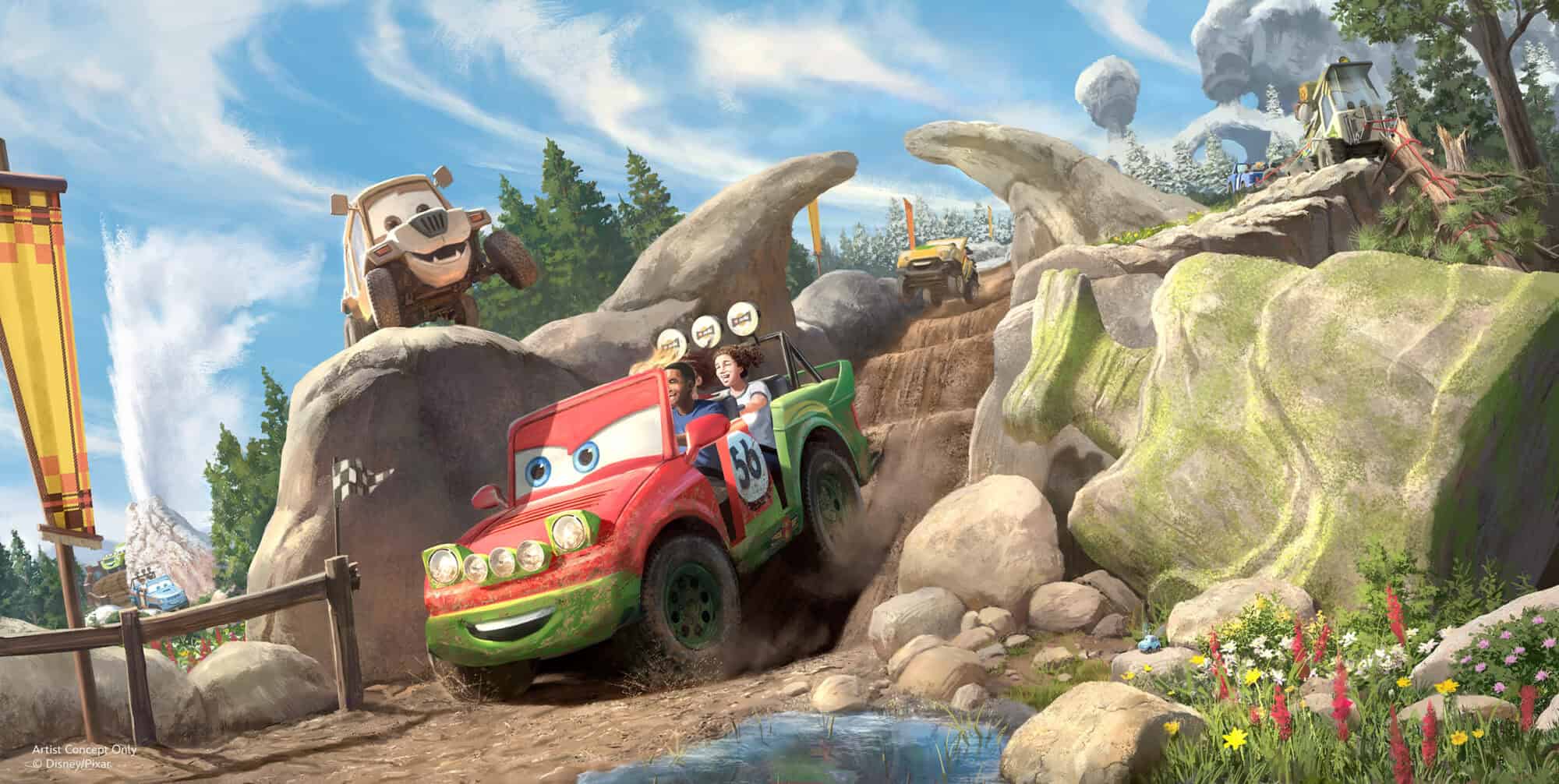
When the original came out in March, we tied the patent to Cars Ridge Run Rally, the off-road rally race planned for Piston Peak National Park in Magic Kingdom’s Frontierland. Disney hasn’t confirmed that the patent will be used for the ride, so for now that connection is still speculation.
Keep Reading
- Get the full rundown on Disney’s original free-range ride vehicle patent and its off-road terrain from March.
- Take a look at the full-scale Piston Peak rally race ride vehicle Imagineering showed at D23 Expo, along with new concept art.
- Catch up on Disney’s patent for a new flying theater ride system, which loads guests on a level platform before tilting them upright.
As always, keep checking back with us here at BlogMickey.com as we continue to bring you the latest news, photos, and info from around the Disney Parks!