
Republican Joe Strada wins Florida’s 11th Congressional District, replacing retiring Daniel Webster
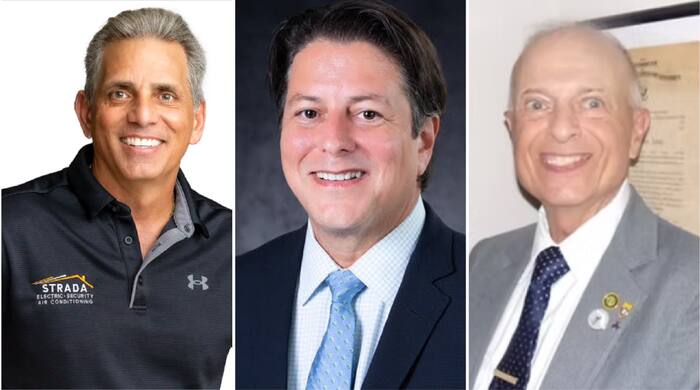
From building a home-services business to securing a seat in the U.S. House of Representatives, Republican Joe Strada is headed to Washington after winning Tuesday’s election for Florida’s 11th Congressional District.
The Associated Press called the race for Strada, who received approximately 53% of the vote in unofficial election-night results.
Strada defeated Democrat James Pericola and Libertarian Ralph Groves to fill the seat being vacated by longtime Republican Congressman Daniel Webster, who announced earlier this year that he would not seek another term.
Following his victory, Strada shared a statement with News 6 expressing gratitude to Central Florida voters and his family.
“I am incredibly grateful to have earned the trust and support of Central Floridians and look forward to fighting for the people who make this part of our state so special,” Strada said. “I want to thank my beautiful wife Karen and our family for their love, patience and support.”
The victory keeps the congressional seat in Republican hands and places a first-time member of Congress in charge of representing communities across Sumter County and portions of Lake and Orange counties.
For voters, the decision came down to more than party affiliation. The candidates presented different professional backgrounds, different approaches to government and competing proposals for addressing the financial pressures facing Central Florida families.
A businessman headed to Washington
Strada built his career far from the halls of Congress.
The Lake Mary businessman co-founded Strada Services in 2003 after spending years working in the skilled trades. According to the company’s official history, Strada began working at age 14 and later earned professional certifications in electrical work, plumbing, air conditioning and construction.
What began as a home-services business grew into a company providing electrical, plumbing, air conditioning and security services.
Strada made that private-sector experience central to his campaign, arguing that Washington needs elected representatives who understand how to manage a business, create jobs and balance budgets.
His published campaign platform outlined several proposals intended to change how Congress operates.
Among them were establishing congressional term limits, investigating potential insider stock trading by members of Congress and pursuing a constitutional amendment requiring the federal government to maintain a balanced budget.
The campaign also emphasized reducing government spending, cutting regulations on businesses, increasing American energy production and strengthening domestic manufacturing.
On immigration, Strada supported stronger border enforcement, completing the border wall and increasing efforts to combat human trafficking and drug cartels.
He also made workforce development a priority, supporting skilled-trades training and expanding opportunities for Americans seeking careers outside traditional four-year college programs.
Strada’s campaign focused on three central principles: making Congress more accountable, limiting how long politicians remain in office and requiring greater responsibility for government spending.
Those proposals will now become part of the agenda he seeks to advance as a member of Congress.
Pericola campaigned on affordability and government experience
Strada’s Democratic opponent, James Pericola, brought a different professional background to the race.
An attorney with more than three decades of experience in public service and government affairs, Pericola previously worked for former Florida Sen. Bob Graham and served as a presidential appointee during the Clinton administration.
According to his campaign biography, Pericola served as special assistant to the chairman of the National Transportation Safety Board, working with federal agencies and congressional officials on transportation safety and responses to major aviation disasters.
He later built a career advising businesses, organizations and local governments on public policy.
Pericola’s campaign centered heavily on the cost of living.
His proposals included pursuing federal funding to address affordable housing shortages, helping reduce property insurance expenses and providing additional tax relief for middle-class families.
One of his more specific proposals called for eliminating federal income taxes for people earning less than $100,000 annually.
Health care and retirement benefits were also central to his campaign.
Pericola pledged to oppose cuts or privatization of Social Security and Medicare while supporting additional efforts to lower prescription drug prices through Medicare negotiations.
He also supported protecting the Affordable Care Act and expanding access to affordable medical care.
On elections and government accountability, Pericola advocated for stronger voting-rights protections and changes to the congressional redistricting process.
Despite their differences, both Pericola and Strada publicly pledged to protect Social Security and Medicare, programs that are particularly important to many older residents living in and around The Villages.
A primary decided by just 393 votes
Strada’s path to Tuesday’s victory began with one of the closest contests of his campaign.
During Florida’s August 18 Republican primary, Strada competed against four other candidates seeking the party’s nomination.
His closest opponent was Carey Baker, the former Lake County property appraiser.
Strada received 27,389 votes, compared with Baker’s 26,996 — a difference of just 393 votes.
That narrow margin, amounting to less than half of 1% of the vote, triggered a machine recount under Florida election law.
The recount confirmed Strada’s nomination, allowing him to advance to the November general election.
Pericola, meanwhile, defeated Royal Webster and Dan Williams in the three-way Democratic primary.
The general election also included Libertarian Ralph Groves, giving voters a third option on the congressional ballot.
A significant difference in campaign financing
The candidates entered the general election with vastly different financial resources.
According to Federal Election Commission records covering campaign activity through October 14, Strada’s campaign reported approximately $5.51 million in total receipts.
Of that amount, $5 million came from loans Strada made to his own campaign.
Pericola’s campaign reported approximately $225,868 in total receipts, including nearly $65,000 in loans from the candidate.
The difference represented a significant financial advantage for Strada during the campaign.
The distinction between contributions and loans is important. Strada’s reported total did not represent $5.5 million in outside donations, because the overwhelming majority came from his own financing.
The financial figures illustrate two very different approaches to funding the campaigns: one candidate relied heavily on substantial personal financing, while the other operated with considerably fewer resources.
Voters choose under newly drawn congressional boundaries
This election also took place under a new congressional map.
In May, Florida adopted revised congressional boundaries through House Bill 1-D, changing the geographic makeup of several districts ahead of the 2026 midterm elections.
The newly drawn 11th Congressional District includes all of Sumter County and portions of Lake and Orange counties.
Among the communities represented within the district are areas around Clermont, Groveland, Winter Garden and The Villages.
The changes expanded the district farther into Orange County while removing territory it previously included in Polk County.
That meant some voters cast ballots in a different congressional district than they had during previous elections.
The winner will represent the newly established district boundaries when the next Congress convenes in January.
What Strada’s victory means for Central Florida
Strada’s election means Republicans will retain a congressional seat that Daniel Webster has represented for years.
Webster was first elected to Congress in 2010 and has represented Florida’s 11th Congressional District since 2017.
His retirement created an open-seat race, guaranteeing that voters would send someone new to Washington regardless of which candidate prevailed.
Strada will serve a two-year term in the U.S. House of Representatives, where members vote on federal legislation involving taxes, government spending, health care, immigration, infrastructure and national security.
For Central Florida, the next representative will also have opportunities to advocate for federal funding and assistance involving transportation improvements, disaster recovery, infrastructure and other community needs.
The outcome carries national implications as well.
Every seat in the U.S. House was up for election this year, with the results determining the balance of power between Republicans and Democrats in Congress.
Strada’s win preserves one of those seats for Republicans.
But the policies he campaigned on will still require support from other lawmakers, and in many cases approval from the Senate and president, before becoming law.
For now, voters in Florida’s 11th Congressional District have made their choice.
After a campaign that began with a Republican primary decided by fewer than 400 votes and ended with a general-election victory, Strada is preparing to trade the business world for Capitol Hill.
And while his election-night statement focused on gratitude to the voters and family members who supported him, the next chapter will focus on what he can accomplish for the Central Florida communities he will soon represent.
Additional information and official resources
- Florida Division of Elections — Congressional election results
- Florida Legislature — 2026 congressional redistricting legislation
- Federal Election Commission — Joe Strada campaign finances
- Federal Election Commission — James Pericola campaign finances
- Joe Strada’s published campaign priorities
- James Pericola’s campaign website
Election-night results are unofficial until the required canvassing and certification process is completed.