AI is changing home listings. Can you trust what you see?
The home of your dreams may be just a click away. But as artificial intelligence transforms real estate listings, the photos buyers see online may not match what they find when they walk through the front door.
AI tools can furnish an empty room, brighten a gloomy sky or quickly adjust a photo. They can also make a repair appear finished, add a lawn that is not there or change a room in ways that distort the property. The difference matters: listing photos are often a buyer’s first look at a home, and sometimes the reason they decide to visit.
For homebuyer Bruce Walck, the gap between a listing image and reality can be startling.
“When you get there, it’s like, whoa, whoa, wait, it doesn’t look anything like that,” Walck said.
As he searches for a home, Walck said digitally enhanced photos can set expectations that the property does not meet.
“You almost start to assume that’s what it’s going to look like when you get there,” he said.
Real estate agent Shannon FitzPatrick of RE/MAX Signature said AI can help buyers picture how an empty room might be used, as long as the image remains faithful to the home.
“You want it to be real, but use the tool to kind of give people a creative idea of what could be,” FitzPatrick said.
Virtual staging adds furniture or decor to a photo without physically changing the property. FitzPatrick said agents may be looking for new ways to attract buyers in a challenging housing market, but warned against edits that set buyers up for an unpleasant surprise.
“You want to make sure that you don’t change things too much so that when someone walks in the door they’re not going, ‘Wait a minute, there’s no fireplace,’” she said.
In one example reviewed by News 6, two images show the same room in different ways. A small disclosure identifies the altered image with the words “Digitally altered.” For buyers, that label can be a clue to look more closely at what is real and what has been added.
Kismet Davis, an Orlando-area real estate photographer who has worked in the field since 2014, said AI is not inherently a problem. He uses it in parts of his own workflow, including to help keep colors consistent across photos. But he said the tool should not change a home’s structure or layout, or depict something that does not exist.
Davis said he has been asked to make unfinished repairs look complete. In some cases, he said, clients asked him to hide water damage — even when a leak was still active — or to turn a bare dirt lot into a green lawn. He declined those requests, telling clients he could return to photograph a room after repairs were completed.
“I don’t want to misrepresent what the buyer or tenant might see when they get there,” Davis said. “It makes us all look bad if they waste their time driving to some place and it’s not what they thought it was going to be.”
Davis said he draws a line between removing a minor distraction, such as a trash can or garden hose, and digitally changing a feature that a buyer would encounter in person.
That distinction is central to the debate: a photo can be carefully composed or corrected without changing the facts of the property. But hiding damage or implying a repair is done can leave buyers with a false impression.
Davis said AI editing is fast, but not always consistent. He has tested the same image and prompt multiple times and gotten different results. He said telltale errors can include distorted details, such as garbled house numbers, while over-saturated color and heavy contrast can make a listing look artificial.
“You’ve got to start with that good raw material first,” Davis said. “It’s not going to be good if you just need it to generate something that doesn’t really exist.”
Agents using Stellar MLS must follow rules intended to keep listing photos accurate. The Central Florida-based multiple listing service allows virtual staging, but says photos must present a true and accurate picture of the property. The rules apply whether an agent uses traditional editing software or AI.
Under the rules provided to News 6, agents may digitally add, remove or replace furniture, artwork and other personal property that does not come with the home. Routine corrections to underexposed photos are also allowed.
Virtual staging cannot be used to:
Conceal damage, including holes in walls, exposed wiring or damaged flooring.
Add, remove or alter permanent fixtures, such as fireplaces.
Distort a room’s dimensions or make it appear larger than it is.
Create nonexistent views or misrepresent the property’s surroundings.
Digitally alter exterior features beyond unattached furniture or decor.
Virtual staging is also prohibited for properties under construction or not yet built.
In a statement to News 6, Stellar MLS said reliable property information is critical to homebuyers’ decisions. It also emphasized that disclosure alone does not make a misleading edit acceptable: “Disclosure does not make an otherwise misleading edit permissible.”
Davis recommends that buyers:
Read the listing description carefully. Look for virtual-staging disclosures and details about features, repairs or renovations.
Compare more than one view. Check whether photos, video and a 3D tour appear consistent. Davis said tours can offer a useful cross-check because they are harder to edit in the same way as still photos.
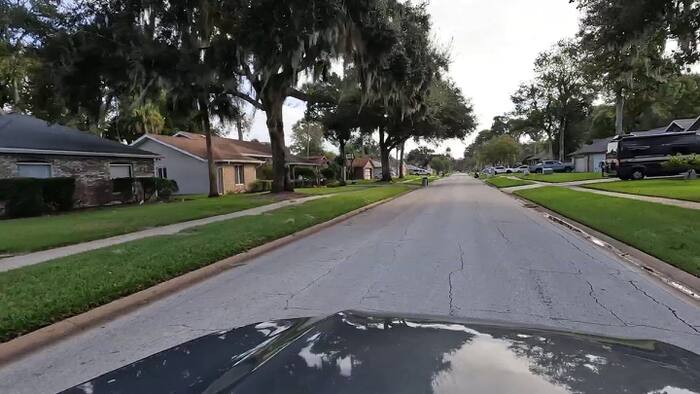
Check the exterior independently. Compare the listing with Google Street View or other available street-level imagery to see whether the home and surroundings match.
Ask direct questions before scheduling a showing. If an image looks unusually polished or a feature is unclear, ask the listing agent whether it was digitally changed and whether the feature is physically present.
Confirm important details in person. Photos and tours are a preview, not a substitute for seeing the home and checking its condition.
If a photo looks too good to be true, Davis said, it is worth taking time to verify it rather than assuming the image tells the whole story.
Stellar MLS told News 6 it uses Listing Data Checker to scan listing information and Restb.ai photo-compliance technology to flag images that may violate its rules. The organization acknowledged the tools have limits and said no technology can detect every AI alteration. Real estate professionals can also confidentially report suspected violations for staff review.
